Published .
A wake is a gathering after a funeral, so family and friends can be together. There is no required form. You decide who comes, where, when and what it feels like, and it can be as small or as simple as you need. If you are arranging one now, often at short notice, this is the order we would do things in.
Fast answer: Settle roughly how many are coming, ask your funeral director how long the service will run, then find a place that can take you at that time. Keep the food simple. Add a few personal touches if you want them. You don't have to do all of it, and nobody is marking you on it.
What is a wake, and what happens at one?
It's the part after the service. People arrive, have something to eat and drink, talk, and share memories. Some families keep it quiet. Others want photographs, music and stories. Both are fine.
Nothing has to happen at a set moment. There doesn't need to be a speech, a toast or a particular order of events. If you'd like someone to say a few words, that's your choice. You can also leave it to the conversation.
Start with the official steps
A wake sits alongside the funeral, so it helps to know where you are in the wider process. GOV.UK sets the steps out in one place, in What to do after someone dies (checked on 22 November 2026).
- A doctor confirms the death. Once the medical examiner's office confirms you can register it, you have 5 days to register, weekends and bank holidays included. In Scotland it's 8 days.
- You then get a burial or cremation certificate, often called the green form. It goes to your funeral director, the crematorium or the burial authority before the funeral.
- GOV.UK's Tell Us Once service lets you tell government about the death in one go. You'll still contact banks, employers and similar organisations yourself.
The funeral date drives everything else, so get that fixed first.
1. Decide roughly how many are coming
You don't need an exact number. A rough one is enough to choose a space and plan food.
- Start with close family, then friends, neighbours and people from work or clubs.
- Think about who will want to come but may not feel able to ask. A line on the funeral notice, such as "all welcome afterwards at...", saves people wondering.
- Numbers can change on the day, so leave a little room in the space and the food.
Tell people the place, the time and how to get there. Say whether there's parking.
2. Fit the timing around the service
Ask your funeral director how long the service will run and when the cars are expected to leave. They'll know the details for your funeral.
- Allow for travel from the service to the wake, and for people arriving in waves rather than all at once.
- Tell the venue your expected arrival time, and let them know straight away if it changes.
- Think about how long you want to stay. Some families want a short gathering, others an afternoon. Pick what suits the people most affected.
3. Choose a place
You might choose somewhere you already know: a pub, a club, a village hall or a family home. Each has trade-offs, mostly around space, food and how much you have to do yourself.
Whichever you choose, it's worth asking:
- Is the space just for your group, or will others be in the room?
- How many people can it take, seated and standing?
- Is room hire charged, and is there a deposit?
- Is food provided, or can you bring your own? Can they cover allergies and dietary needs?
- Is there parking, and is the way in step free?
- Can you play music or show photographs?
- What time can you arrive, and how long can you stay?
- Can they take a booking at short notice?
Phone before you visit. A short call usually answers most of this.
4. Food and drink, in outline
Keep it simple. People want to sit, talk and have something in their hands. Sandwiches, finger food or a hot buffet, with tea, coffee and something from the bar, covers most gatherings.
The detail, including how much to order and what suits different numbers, is in food for a wake.
5. Small touches, if you want them
These are suggestions, never obligations.
- A table of framed photographs, or a slideshow on a screen.
- A favourite piece of music playing quietly.
- A memory book or a box of cards where people can write something down.
- A short list of the person's favourite things, such as a drink, a song or a team.
- Flowers, if the family would like them.
6. Costs to expect, by type
We haven't put figures here, because they vary by area and by what you choose. Knowing the types helps you ask the right questions.
- The funeral itself. GOV.UK says funeral costs can include funeral director fees and third-party costs such as crematorium or cemetery fees. Funeral directors must publish a price list for their standard products and services, so ask for it.
- The wake space. Some places charge room hire and some don't. Ask which, and ask about any deposit.
- Food and drink. Priced per person or as a package.
- Extras. Flowers, printed orders of service and anything you hire in.
If paying for the funeral is a worry, you may be able to get help. GOV.UK explains the Funeral Expenses Payment, which is for people who get certain benefits and need help paying for a funeral they're arranging (checked on 22 November 2026). Its page sets out who qualifies.
If you'd like to hold it at The Anchor
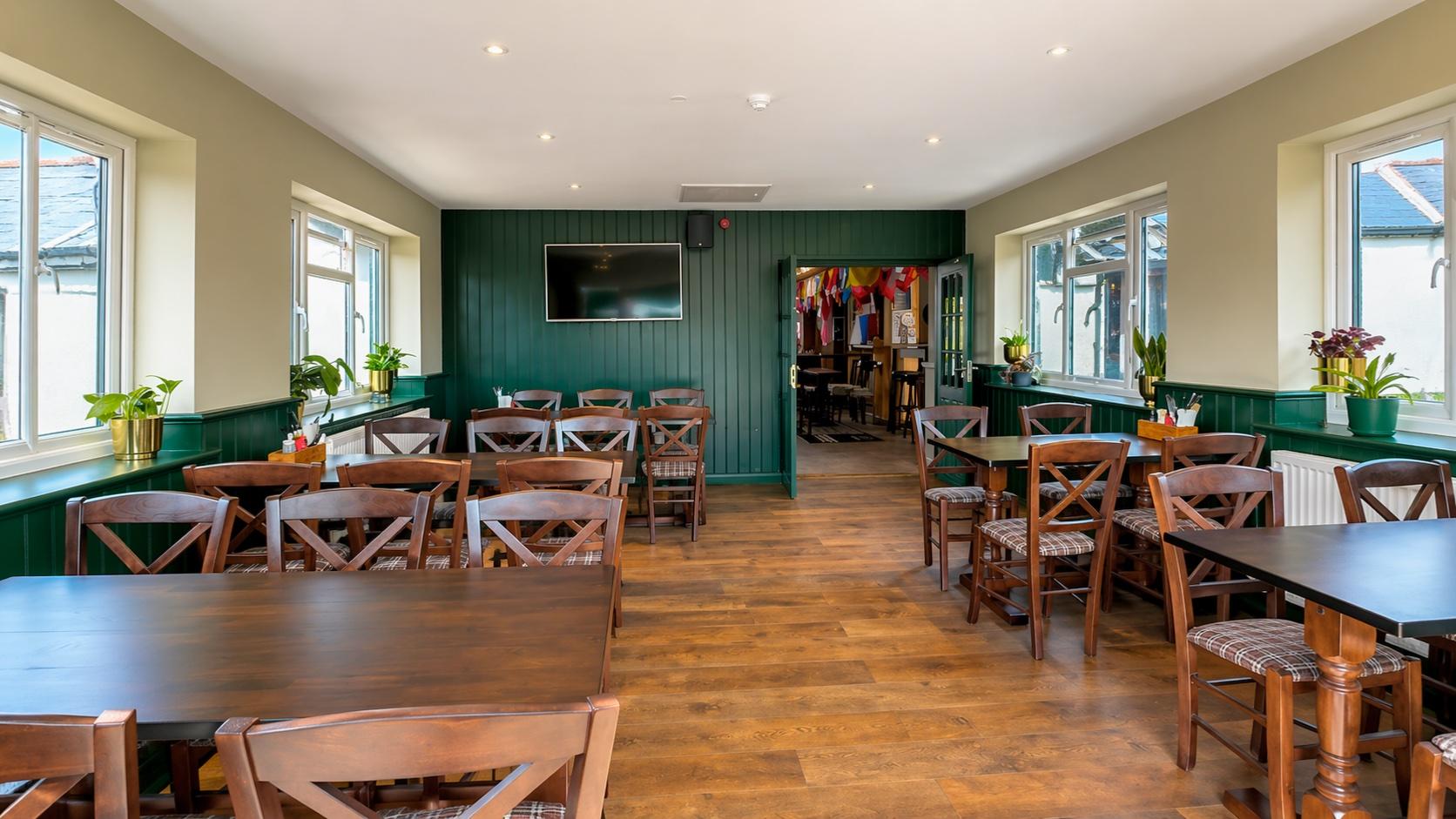
We're a village pub in Stanwell Moor, near Heathrow. For a wake, the dining room is a dedicated space for your family and friends. It seats 26, or up to 50 standing, and its French doors open onto the beer garden. The tables can be moved into any layout. If more people are coming, tell us your numbers and we'll suggest the right space.
- Food and drink. Catering, and drinks from the bar. Tell us about any allergies or dietary needs when you book and we'll do our best. Everything is prepared in one kitchen, so we can't guarantee there's no cross-contamination.
- Photographs and flowers. We have TVs to show photographs. We don't arrange flowers, but you're welcome to bring your own flowers and photographs.
- Music and speeches. Give us a playlist and we'll play it through the pub's sound system, inside and outside, or through a separate speaker in the dining room if you'd like it kept to your room. There are microphones for speeches, and there's no charge for the music or the microphones.
- Cost. Room hire is charged by the hour for the space you book. A £250 booking and damage deposit secures your date. It's held separately from your bill and refunded after the event, less any documented deductions.
- Short notice. We accept short notice, 24 to 48 hours.
- Times. A start before 12pm or a finish after 10pm is by arrangement, so tell us the times you have in mind.
- Parking. We've 20 free spaces right outside. There's no time limit while you're with us, and nothing to register.
You don't need a date or numbers to ring. Call 01753 682707, or leave your name and number on the wakes page and we'll call you back the same day. If you ask late in the evening, we'll call you the next morning.
Sources: GOV.UK, What to do after someone dies, GOV.UK, Arrange the funeral and GOV.UK, Funeral Expenses Payment, all checked on 22 November 2026.